Case study 01
Director-friendly control for generated shots.
A director or creative team needs AI video generation that behaves less like a prompt lottery and more like a controllable production tool: camera, motion, force, lens choices, color intent, and continuity.
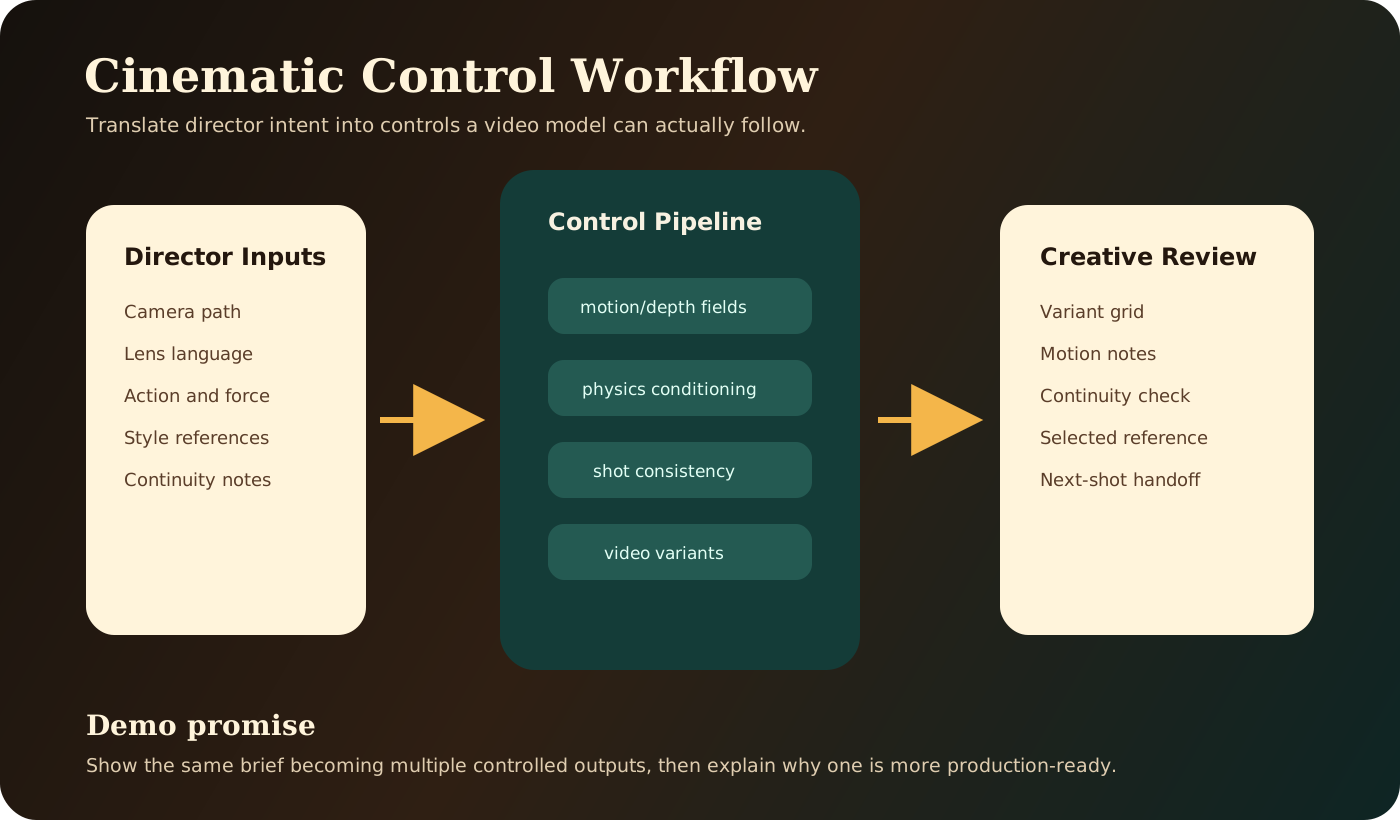
The workflow.
The value is not one lucky output. It is a repeatable path from creative intent to controlled variants a team can review.
- Start with a brief: scene, tone, camera language, subject motion, and continuity constraints.
- Translate direction into controls: camera pose, depth, motion vectors, force vectors, style cues, and shot relationships.
- Generate multiple shot variants from the same controlled setup.
- Compare variants for plausibility, continuity, emotional tone, and production fit.
- Lock the best direction and use it as a reference for follow-up shots.
The related repo explores a cinematic control layer for lens, depth, style, shot continuity, and physics-conditioned motion.
- Same prompt with different camera paths.
- Same scene with different force or motion inputs.
- Failed drift versus improved conditioning.
- Locked reference used across follow-up shots.
"Here is how your creative team can move from a static concept to controllable video variants without starting over each time."
Product insight.
This workflow surfaces which controls feel intuitive, which failure modes break trust fastest, and what needs to be visible in the UI for a team to confidently iterate.