Pre-sales proof
A deck a recruiter or account lead could forward in two minutes.
This is the pre-sales layer: what problem the workflow solves, what a customer would see in the demo, what guardrails matter, and how the prototype-to-production line is explained honestly.
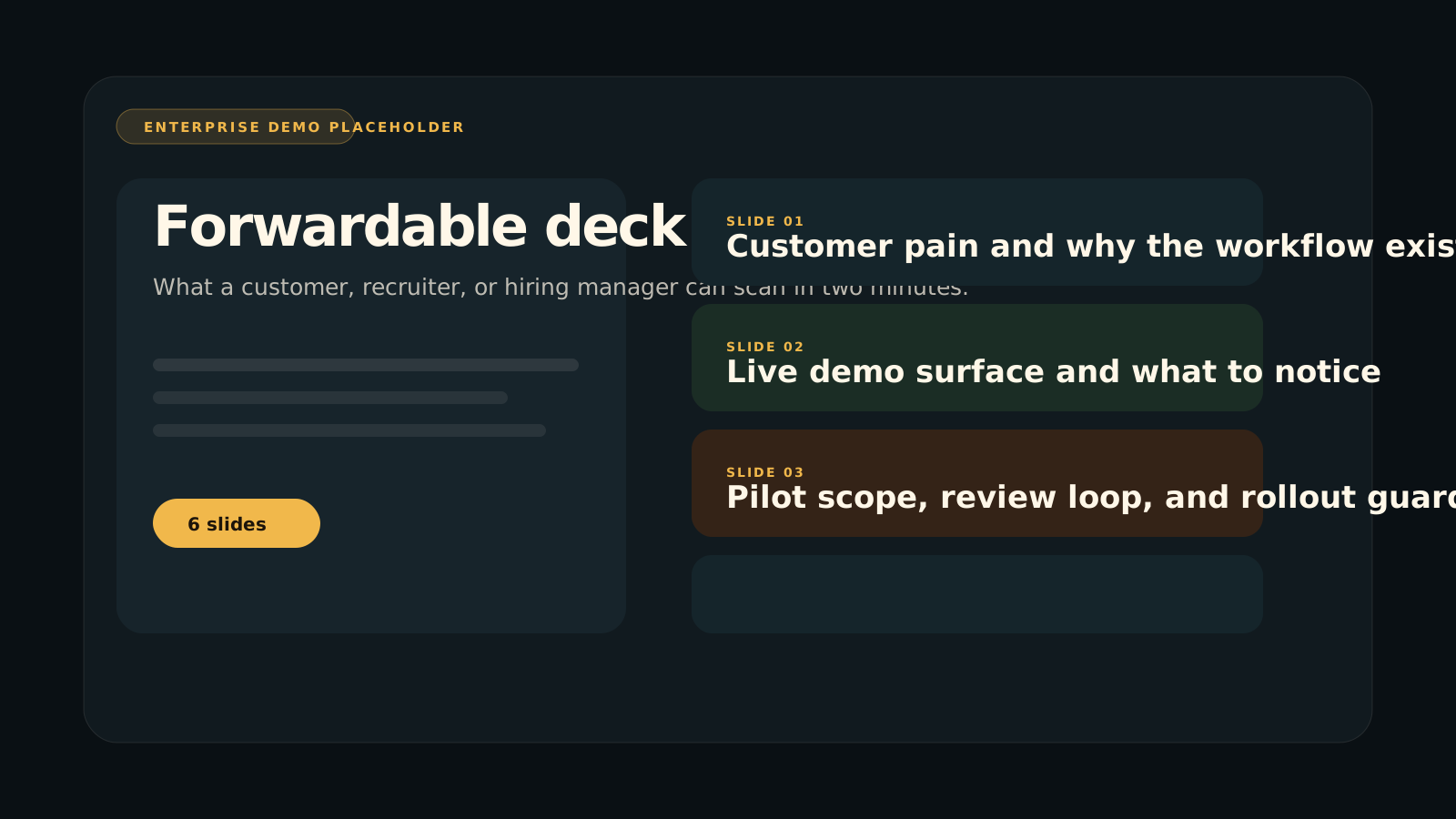
This page shows the part of the role that sits between creative, technical, and commercial teams: how to explain the workflow in customer terms without flattening the technical reality.
Slide structure.
This is the forwardable version of the portfolio story: compact, customer-readable, and strong enough to support a real conversation.
The bottleneck
Creative teams do not need more novelty. They need control, review, evaluation, and rollout habits around the model.
The live surface
Show one product surface or prototype view and explain what the team should notice there.
The review loop
Frame quality in terms a creative lead and product team can both use: consistency, motion, instruction fit, and editability.
The pilot
Define the narrowest useful rollout: one workflow, one approval path, one success metric, and one risk boundary.
What a hiring manager should feel.
The goal is not to make the portfolio look more finished than it is. It is to make it obvious how you would speak in the room.
The story starts from the customer problem, not the repo.
Prototype boundaries are named cleanly instead of hidden behind hype.
The workflow is grounded in film and post-production judgment, not only systems language.
The close is about adoption, review, and rollout, which is the real enterprise conversation.
"A strong demo deck does not just explain the tool. It helps the customer imagine the workflow living inside their team."