Recording-ready demo
The public walkthrough page is ready for the moment the recording exists.
This is the artifact that closes the remaining trust gap: one short, screen-recorded walkthrough that shows the film anchor, one workflow, one live demo surface, and one explanation of how feedback turns into product-readable signal.
Walkthrough slot.
When the file below exists, this page becomes the shareable public proof. Until then, it shows the exact structure and file path the recording will use.
Drop the recording here
A single unlisted Loom or exported MP4 is enough. This page is already linked from the landing page and the role-fit proof table.
This poster is intentionally a placeholder. It gives the page a finished visual surface now without pretending the recording is already public.
What the walkthrough should prove.
A strong recording answers the three customer-facing questions that matter most: can you demo it, can you teach it, and can you turn vague creative notes into something the product team can act on?
Open with the film anchor, then show one customer problem and one workflow answer instead of a repo tour.
Explain what a team should notice, what decision they should make next, and where the workflow is intentionally constrained.
Use the creative QA framing to show how "this feels wrong" becomes a scorecard, failure label, or product insight.
End on why the portfolio is organized around workflow adoption instead of isolated model novelty.
Supporting proof around the recording.
Once the walkthrough exists, these are the two pages that make it feel less like a standalone video and more like a real customer enablement package.
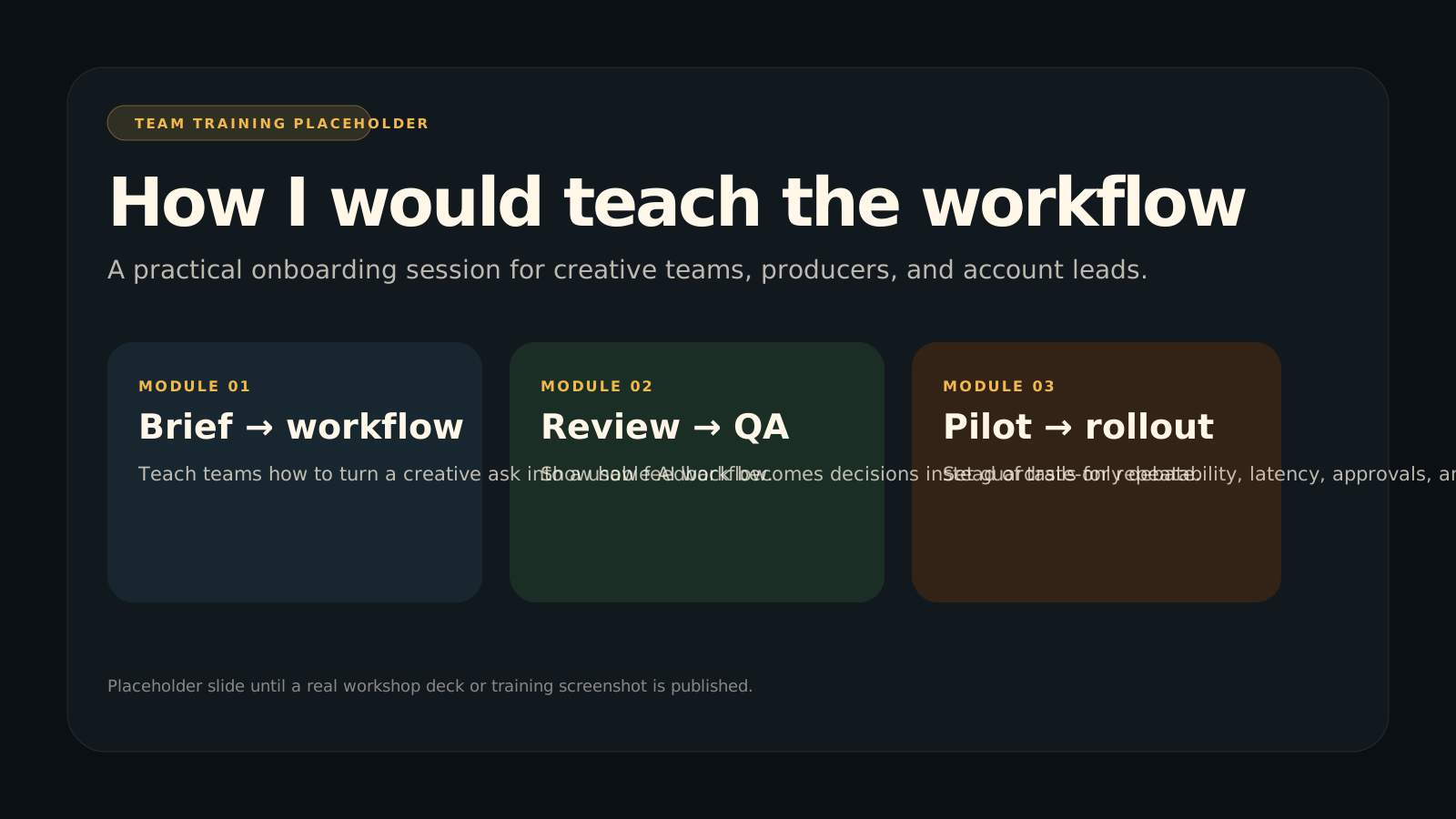 Training surface
Workshop
How I would teach the workflow to a creative team after the first demo.
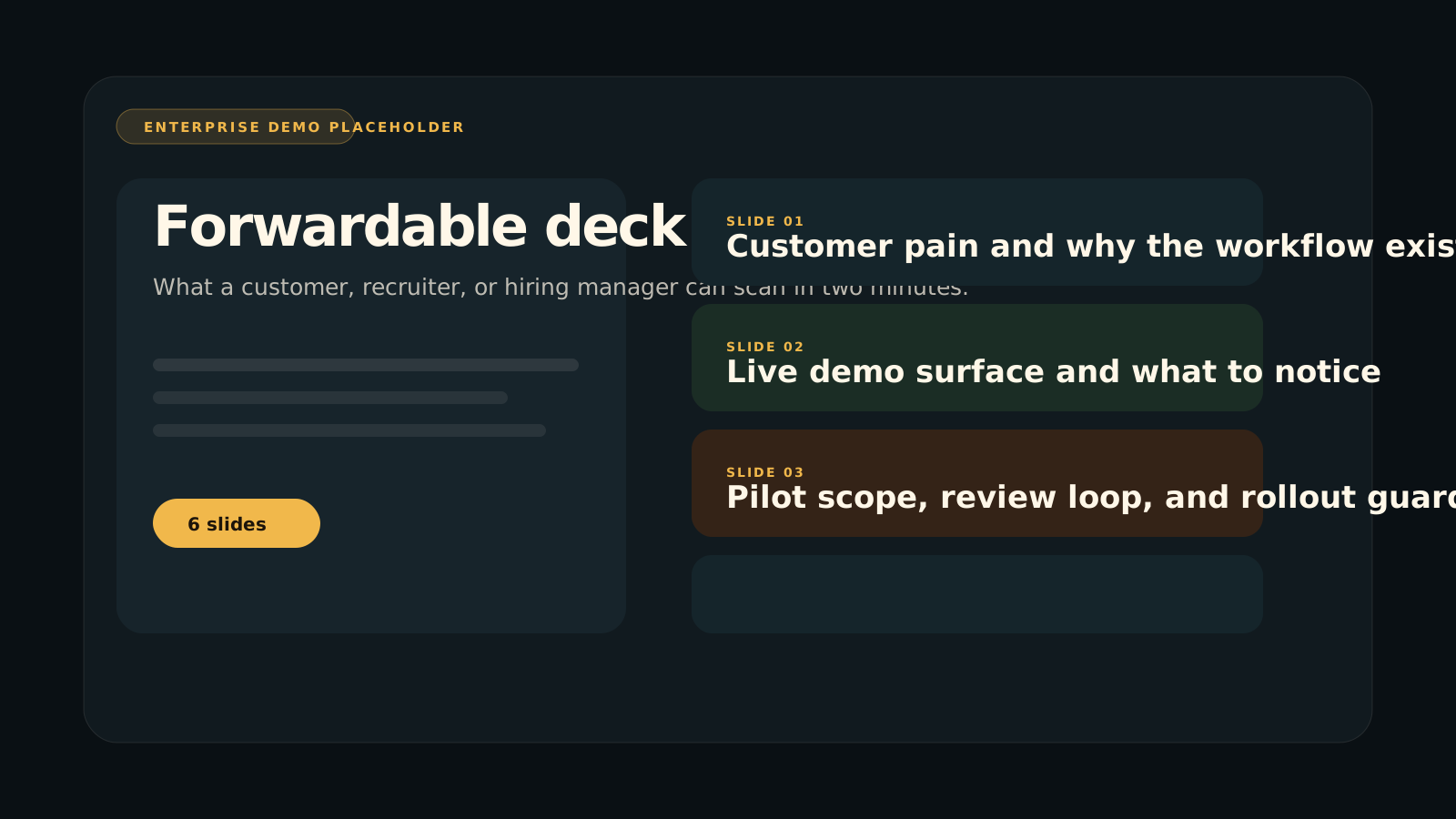 Forwardable asset
Demo deck
The compact pre-sales layer for recruiters, account teams, or hiring managers.
 Creative anchor
Film proof
The filmmaking context that keeps the whole workflow story grounded.
Recommended 90-second flow.
Keep it simple. One moving artifact is more persuasive than a longer, more polished reel that avoids the product conversation.
- 0:00-0:15 Start on film proof and explain the production constraint: story, continuity, and delivery matter more than novelty.
- 0:15-0:35 Open one case study from the portfolio and frame the customer problem in plain language.
- 0:35-0:55 Switch to the live splat viewer, orbit the sample scene, and explain what a creative team would review there.
- 0:55-1:15 Show how the creative QA lens turns review comments into explicit pass or fail language.
- 1:15-1:30 Close with the thesis: models become products when workflows make them usable.
"The recording does not need to be cinematic. It only needs to make it obvious that I can lead a customer through the workflow."